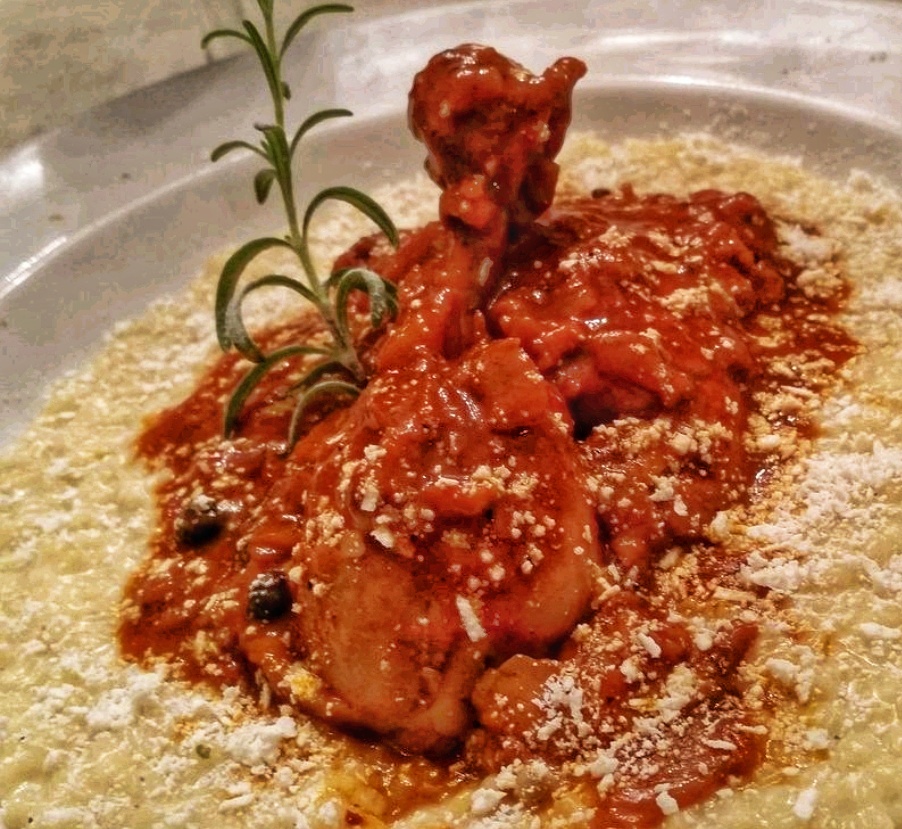
 The French have "Coq au Vin" and us Greeks have "Kokkoros Krasato". Both dishes are are alike as a rooster gets braised in wine (among other things) but the flavour profile is different. It's best to not confuse the two dishes.
So how does a rooster end up in the kitchen pot and ultimately on the dinner table? Well, the rooster in question will be an older bird and therefore a longer cooking time in required to make it tender. The age of the fateful rooster depends on the reason that it ended up getting dispatched in the first place.
The rooster could have been part of a farm's culling. The males do not produce eggs and nor are they needed to produce eggs (hens will lay eggs without the help of the rooster) and are only needed if the farmer needs some fertile eggs. The farm needs one rooster for every 8 to 10 hens. Extra males (roosters) are culled...and dispatched.
Another reason is that the rooster has become unruly or too aggressive. Some roosters can be disruptive and too territorial, fighting too much with the other roosters, bothering the hens and sometimes even the other farm animals! The only solution is to remove the belligerant rooster and dispatch him to the pot!
The final reason a rooster may end in your kitchen is simply old age. If you end up with one of these roosters, it may requite being marinated overnight to help break down some of the muscle tissue. Some wine, oil, wine vinegar, onions, garlic and spices (along with the rooster) get all mixed-up and thrown in the fridge overnight.
Where would you get a rooster? Here in Toronto, I get rooster from Kostas Meat Market. You might know a farmer or a farmer's market that also sells livestock. You may also check out the the north market of the St. Lawrence Market which mimics a farmer's market.
Your next option is to ask your butcher for a capon. Capon's are castrated roosters and they are more readily available. These birds get "the chop" so as to diminish the aggressiveness of the bird. The meat of a capon is also said to be more tender.
In the instance that you cannot source/find any of the above - you may use chicken. Splurge and go for a free-range bird...a happy chicken. Those $4.99 chickens that you see at the supermarket are industrially raised, they did not have a happy life (as brief as it was) and frankly...they have little flavour. It's all about flavour right? Greek-owned "D & D Poultry" has some excellent free-range chicken raised in a Mennonite farm just south-west of Toronto.
On to the dish. This is a braised dish and again a one-pot wonder (other than the pasta) that will satisfy adults and kids alike. The rooster has to be segmented and then browned. I briefly take out the the meat and then build flavours with onions, garlic, extra-virgin olive oil, grated ripe tomatoes, allspice berries and a cinnamon stick. Greek cuisine embraces these spices in many savory dishes and here, they shine in the Kokkoras Krassatos. A good wine is a must...a good Greek red wine. There are many these days and I recommend one for you to try at the end of the post.
The final ingredient is time. Time for the rooster to braise, time for the spices to perfume the sauce, time for the sauce to concentrate into a velour-like warm sauce. This recipe is for the most part traditional. Some families just use allspice, others just cinnamon, some use cloves with bay leaves, etc. I've chosen allspice and cinnamon.
Another method I've adopted from Kuria (Mrs.) Evangelitsa, who's home I stayed when I visited Sparti last year. Her recipe did not was to not dice up the onions. To quote Kuria Evangelitsa, " you want the flavour of the onions but you still want a smooth sauce". Her solution? Simply peel and halve the onions and throw them into the pot during the braise and remove them at the end.
The very first ingredient to hit the pot was the rooster's skin. I rinsed it, patted it dry and seasoned it with salt and pepper. Into the pot over medium heat, the cover on and the fat from the rooster's skin rendered for a few minutes. The lid comes off after 5 minues and then the skins simply crisps up in it's own fat. Remove the skin when crispy on both sides and reserve.
At this point, you should have some fat in your pot and may need to add some olive oil but I didn't at this stage. The pieces of seasoned rooster were added, browned and then removed. Then the remaining ingredients were added and the slow braise began. Your kitchen will be teleported to Greece where the aromas of wine, allspice and cinnamon permeate the room.
Again, allow time to do it's work and after a couple of hours, you'll have a reduced sauce that will be thin looking but rich in flavour, velvety and delicious. Simmer some some sour trahana and serve as a base with a piece of rooster on top, a ladle of sauce and some grated cheese.
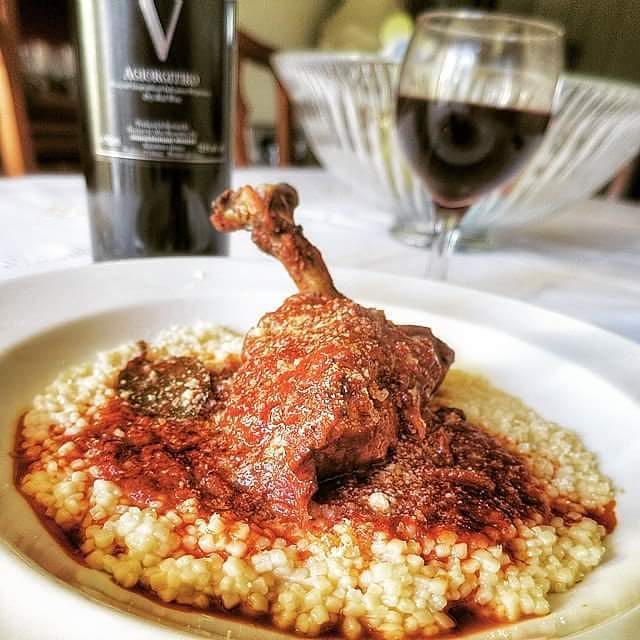
Rooster Braised in Wine with Trahana
(serves 4-6)
1 whole rooster (or capon) or whole chicken, segmented
1/2 cup extra-virgin olive oil
3 medium onions, peeled and halved
2-3 large cloves of garlic
1 cup of dry white wine
4 large very ripe tomatoes, passed through a box grater (skins discarded)
(or approx. 1 cup of pureed canned plum tomatoes)
1 heaping Tbsp. of tomato paste
3 bay leaves
4-5 whole allspice berries
1 stick of cinnamon (about 2 inches long)
1 cup of hot water
coarse sea salt & fresh ground pepper
For Trahana
1 cup sour trahana
1 1/2 cups milk
1 1/2 cups water
pinch of salt
garnish
grated Kefalotyri or Graviera cheese
- Segment your rooster (breasts, legs, etc.). Rinse the skins and segments and pat-dry. Season with salt and fresh ground pepper. In a large pot over medium heat, add the rooster pieces and brown. Flip and brown the other side, remove and reserve.
- Peel your onions and cut them in half. Press the allspice berries deep into the onions and even pierce one of the onions with the cinnamon stick (this way you can easily remove the spices with the onions). Add them in the pot (medium heat) along with garlic, grated tomatoes, tomato paste, bay leaves, red wine and olive oil and gently bring up to a boil.
- Once your sauce has come to a boil, add the reserved rooster pieces and a cup of hot water (or enough to almost cover the meat) and gently stir. Bring back to a boil, season with some salt and pepper and then reduce to a simmer. Cover and simmer on medium-low for 60 - 90 minutes (chicken will take 60 mins. and rooster longer)
- Pierce the rooster meat with a fork. The meat should have some give and flake from the bone. Have a taste of the sauce, adjust seasoning with salt and pepper. Is the sauce thick enough for you? Simmer uncovered and reduce the sauce for another 15 minutes.
- To cook the trahana, add the milk and water in a medium pot and bring up to boil. Add a pinch of salt and the trahana and stir. Reduce the heat to low, cover and simmer, stirring every couple of minutes. The trahana should be cooked until most of the liquid has been absorbed (about eight to 10 minutes). Add more liquid if required, keep stirring/adding liquid until cooked. Adjust seasoning with salt and pepper
- Divide trahana in plates, place a piece of rooster on top of the trahana. Pour a ladle of sauce over the meat and grated cheese.
*Trahana is is nourishing, comforting, easy and quick to prepare is trahana. This ancient Greek ingredient is made by boiling cracked wheat in either milk or yogurt, then drying it in the hot sun. It's then crumbled and stored in pillow cases for future use
** Serve rooster on a bed of Misko bucatini pasta if you can't source trahana





No comments:
Post a Comment